

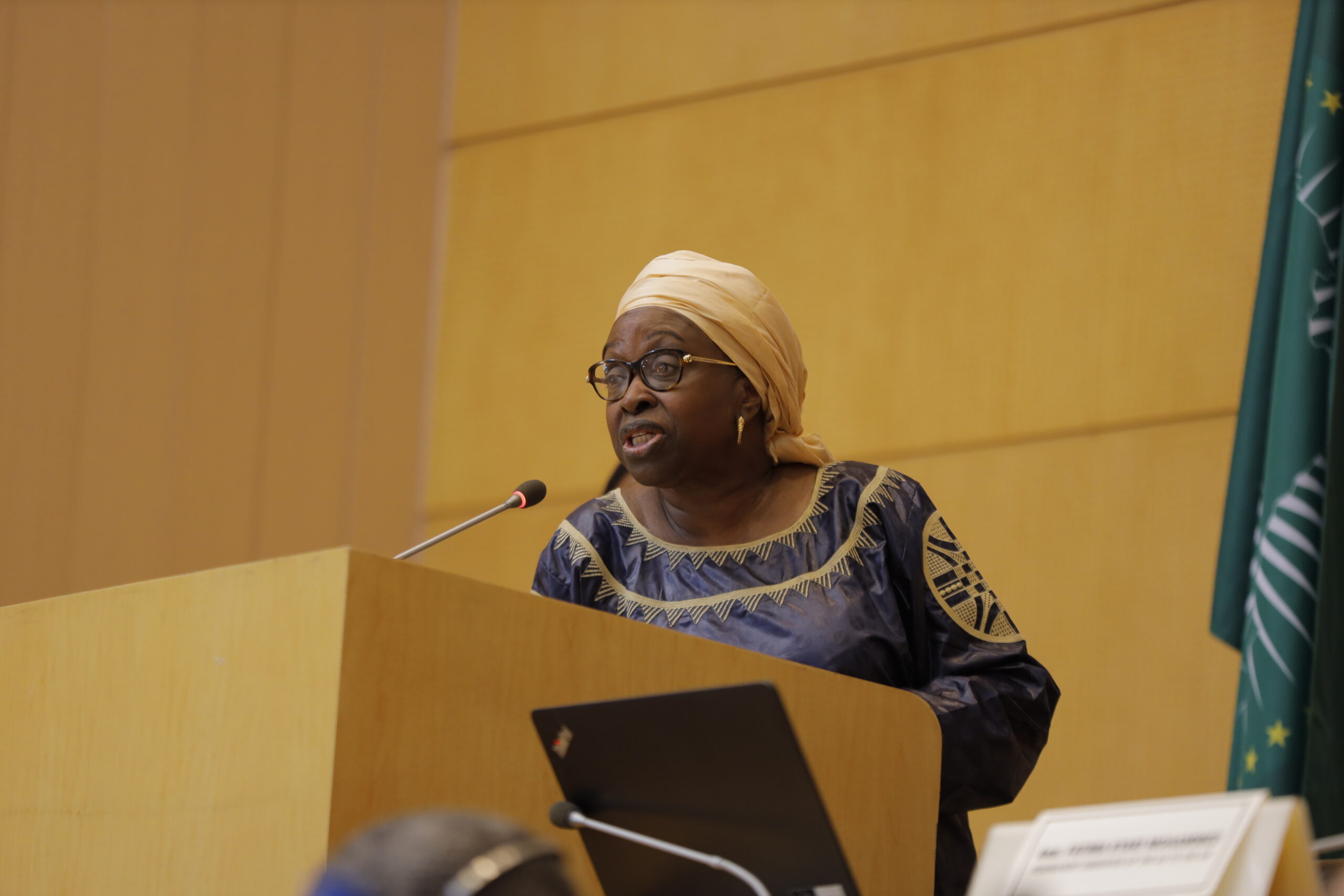
Mr. President, Excellency Verónica Nataniel Macamo Dlhovu, Minister of Foreign Affairs and Cooperation of the Republic of Mozambique and President of the UN Security Council for the month of March 2023. I begin by congratulating you and the delegation of Mozambique, on your Presidency of the Security Council for the month of March 2023 and for convening this Open Debate on the Women, Peace and Security: Towards the 25th Anniversary of Resolution 1325”. Mr. President Allow me to recognize and commend my sister Amina J. Mohammed, the Deputy Secretary-General of the United Nations, for her remarks and her continued dedication and support to women’s leadership, peace, and security not only in the African continent but globally. I thank Ms. Sima Bahous, the Executive Director of UN Women and her Team for the various support across the African continent on the implementation of the WPS policies. I recognize my fellow briefers, Ms. Mirjana Spoljaric Egger, President of the International Committee of the Red Cross and Ms. Paulina Chiziane, the Writer and Activist for their contribution to this debate.
Mr. President; Honorable Members of the Council The debate we are having today is important for us to look back and reflect on what we have achieved and learned, since 2020. This will help us recalibrate the agenda as we move towards its silver jubilee in 2025. It also offers an opportunity to assess how we are emerging from the past two dark years of Covid - 19, which reversed many of the gains made over the past two decades of hard work and sacrifice. GUIDING QUESTIONS (I included this section to guide Mme Diop on questions that her speech should respond to) 1. What goals have you set for the implementation of women, peace and security by the 25th anniversary and what flagship initiatives have you planned for the lead up to it? Mr. President As we look forward to the 25th Anniversary in two years’ time, the AU Office of the Special Envoy on WPS, in line with its mandate to raise the voice of women in peace and security processes, has laid up a two-prong strategy to accelerate the implementation of WPS in the continent. The two strands of the strategy are: i) Strengthening the WPS policy environment at member states level by advocating for adoption and implementation of NAPs by the remaining states. Currently 61% of our member state have adopted a NAP; we hope to attain 75% NAP adoption by 2025. This must be done while strengthening the accountability mechanism set fourth through annual reporting, using the Continental Results Framework. ii) The second strand is building and operationalizing our Pan-African women movement- the African Women’s Leaders Network - currently in 32 nations. Through the Network we are ensuring that women’s leadership is mainstreamed in governance, peace and development and that women’s participation becomes a pre-requisite in all processes. They are the most impacted by conflicts and their contributions can bring long lasting solution. The Network advocate for more women in leadership positions in all sectors, not only during times of conflict, but also in times of peace.,. By doing this, I believe we are creating a critical mass of women leaders, that we so much need to solve our current challenges of conflict, climate change, the COVID-19 pandemic, among others. 2. How do you assess the current impact of armed conflict on women and girls and women's participation and involvement in decision-making processes on conflict prevention and resolution, promotion of peace and security (including participation in peacekeeping missions)? The current impact of armed conflict on women and girls is precarious. The deterioration of the security situation in Eastern DRC and the chronic nature of the conflict in Sahel, Lake Chad basin and the East Africa, combined by climate change and decline in financial flows has exacerbated the suffering of women and girls, reaping them off their dignity through unprecedented rates of sexual violence, deprivation of necessary commodities and services, denying them opportunity to fully enjoy the right to peace and security. For many girls, their future is robbed as they miss opportunity to develop their human capital. To resolve this, we have to restructure and enhance our protection measures. Unfortunately, while many women are engaged in the community level peacebuilding initiatives, their voice is yet to be heard in peace negotiations and mediations where roadmaps for return to peace are drawn. The peacekeeping missions, are still very much male dominated. Changing this situation requires environmental and infrastructural reforms both at national security institutions so as to attract and retain women in police, military and correctional institutions that make a big component of the peacekeeping missions. 3. How effective are our current measures to protect women and girls during armed conflicts and ensure their full participation in peace and security matters? There are existing tools in form of laws and policies to protect women and enhance their participation at both continental and national level. At the continental level, in addition to the existing frameworks, we are in the process of developing a Convection on Violence Against Women and Girls (VAWG), which was strongly recommended by the two positive masculinity conferences held at presidential level in Kinshasa, DRC and in Dakar, Senegal in 2021 and 2022 consecutively. Data from the CRF indicators show some progress in the implementation of the existing laws and policies though inadequate. Many countries have established mechanisms to protect and response to violations committed against women and girls, especially with regards to protection from sexual and gender-based violence. Our member states have established special courts, and set up gender desks and call centers in the security, medical and social institutions as ways of boosting their response to SGBV incidences as well as enhancing a holistic survivor centered support. To change the societal norms that fuel violence against women, our member states are taking more actions geared towards promotion of positive masculinity through development of male engagement strategies and programmes. However, we need to do more, especially in preventing violations and supporting victims to rebuild better through socio-economic and psychosocial programmes. We urgently need measures for ending impunity and holding perpetrators into account. 4. What role should the Security Council play in strengthening measures to protect women and girls, as well as in promoting more effective participation of women in decision-making on the prevention and resolution of armed conflicts? Mr. president, As I conclude, - I commend the work the of the council in realizing the WPS agenda, including the convening of more regular and frequent open debates dedicated to the WPS, inviting women civil society briefers from affected countries and mainstreaming WPS language in other security council resolutions. I think these efforts should be upscaled as the world is still faced with many pockets of conflict and women are bearing the brunt. - I also think the council should work more closely with other regional bodies, such as the AU PSC on matters of common interest. - We must ensure that women’s organizations have access to predictable and flexible funding. This will allow the organizations to effectively carry out their peace building efforts in the current difficult circumstances they are operating in. - And finally, we must rethink the structure of our mediation tables, we must devise ways to ensure wide inclusion, especially at the decision-tables. With these, let me reiterate the African Union’s Office of the Special envoy’s Commitment to working with All member states in efforts to prevent and eliminate conflicts while protecting the dignity of women and girls. We look forward to a more pronounced support to the WPA Agenda. I Thank you for your kind attention