

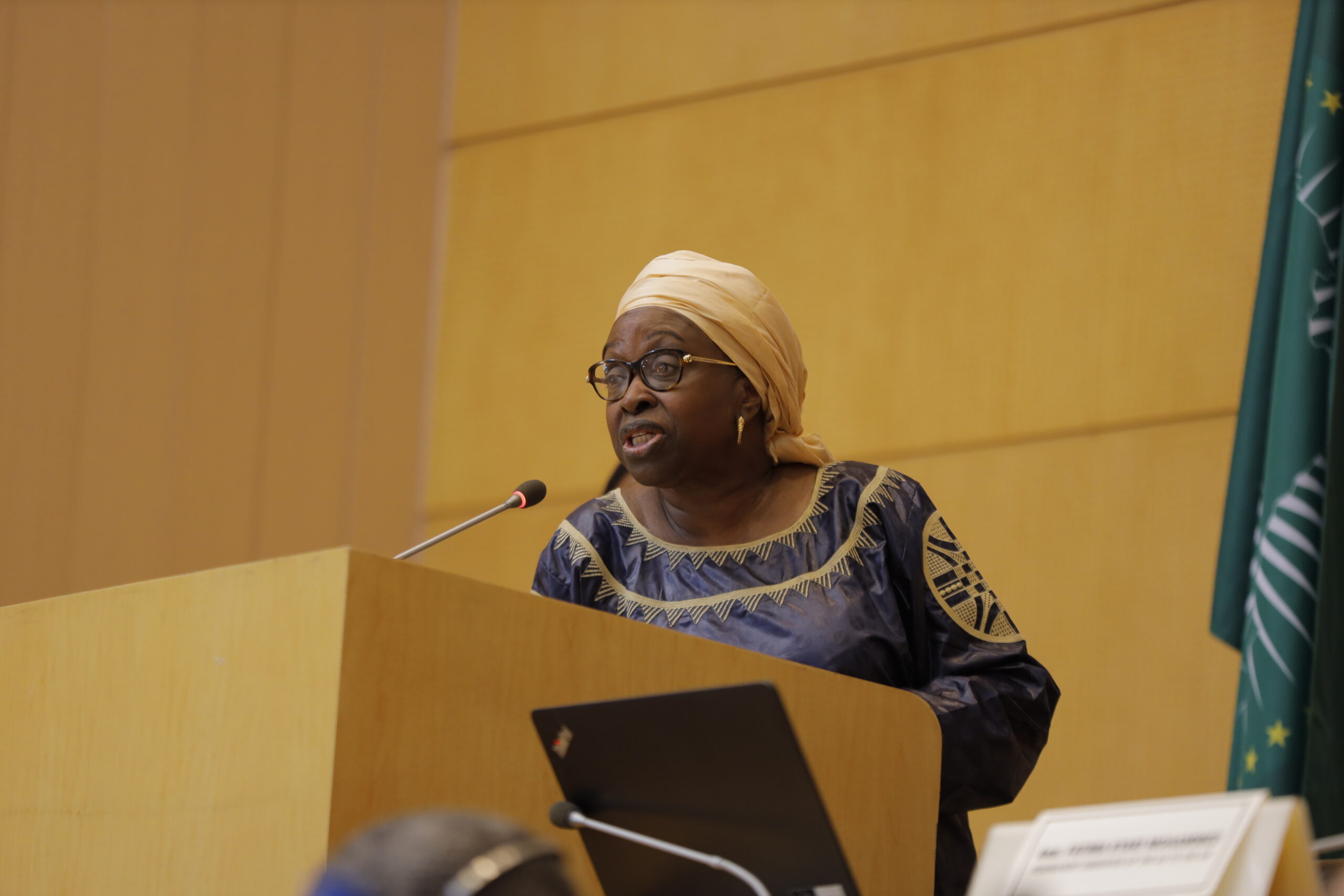
Excellencies, Ladies and gentlemen, I wish to express appreciation for invitation to participate in this important ministerial meeting and to congratulate HE Kamikawa Yoko, the minister of Foreign Affairs of Japan for organizing this conference and for prioritizing the WPS agenda in all your ministerial processes and decisions, including by dedicating a session to WPS during this TICAD ministerial meeting.
Let me begin by emphasising the role of women and the WPS in the transformation of the global peace and security agenda. A fact that renown scholars have investigated and scientifically proven to be true: • For instance, Nilson (2012) notes that the participation of civil society groups, including women’s organizations, makes a peace agreement 64% less likely to fail. • The council on foreign relations report of 2016 also notes that women’s participation increases the probability of a peace agreement lasting fifteen years by 35 percent. • Most recently, Jan Krause and Barnfors (2018) tells us that when women participate in peace processes, the resulting agreement is more durable and better implemented. Consequently, the African Union has placed women’s leadership and WPS agenda very high, demonstrated by the fact that Africa was the first in the world to appoint a Special Envoy on WPS. And has put in place Women’s networks including the FemWise Africa and the Women’s Leadership Network as tools to promote women’s leadership and participation in all sectors of life, in line with Agenda 2063 and agenda 2030, for women to contribute to full transformation of Africa. Excellencies, Ladies and gentlemen, Africa has fully embraced the UNSCR1325, with 65% of our member states having adopted a national action plan as a policy tool to integrate gender perspectives in their national peace and security architecture towards an inclusive and sustainable peace agenda in Africa. To enhance delivery, the AU Peace and Security Council adopted the Continental Results Framework for Monitoring and Reporting on WPS in 2018, as a continental accountability tool to track member states delivery of the agenda) Since its adoption, we have seen increased implementation with concrete results including an increased number of women in peace and security leadership roles. We are also training our peacekeepers on the zero tolerance to Sexual Abuse and Exploitation. In addition, to address the persistence of Violence Against Women and Girls in Afri-ca, we have put in place a conversation on ‘positive masculinity’ championed by heads of states who are leading in redefining masculinity to one that embraces posi-tive masculinity. This transformation, not only enhances the lives of men but also contributes to a more compassionate and equitable society. Where we are now in the processes of drafting the first African convention on Violence Against Women and Girls. As I come to an end, I must emphasise the important role of the private sector in promoting the WPS agenda, including by ensuring their business models are both gender and conflict sensitive, that they are including women in leadership roles in their structures and supporting women led peace building initiatives. Including provid-ing support to the implementation of the African Union Post-Conflict Reconstruction and Development policy. Allow me now to end my remarks by once again commending the Japan Ministry of Foreign Affairs for organizing this TICAD and express our expectations for TICAD to really promote gender equality and women’s empowerment agenda in all its thematic areas, especially promoting women leadership and protection of their rights especial-ly for women in conflict and post conflict zones for sustainable peace, security and development. Thank you!
Challenge & Solution
Project Information
Client:
Ministry of Foreign Affairs of Japan
Location:
Tokyo, Japan
Date:
24th August, 2024