

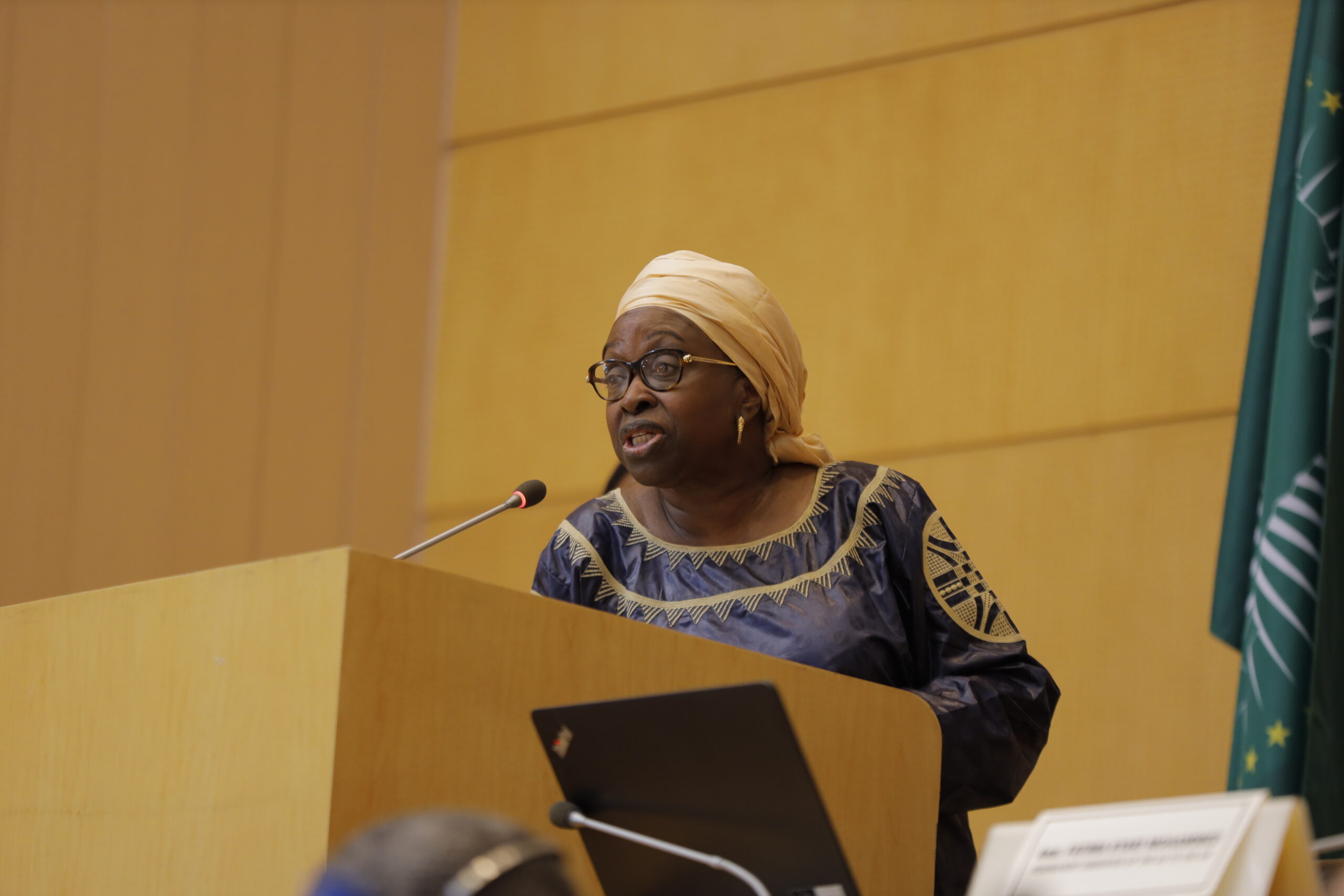
Let me start by thanking Oxfam International for inviting me to this side event on Localizing Humanitarian Aid in Africa: A Call for Action & Support organized at the margin of the African Union Humanitarian Summit and Pledging Conference. I bring you greetings from HE Moussa Faki Mahamat, the Chairperson of the African Union Commission, and a champion of efficient and effective humanitarian response in Africa that is locally driven.
Excellencies, Ladies, and gentlemen, The topic of our discussion today - Localizing Humanitarian Aid in Africa: A Call for Action & Support- is very relevant and timely because across various regions of the continent, challenges to humanitarian action are increasingly becoming more and more complex with the need for humanitarian assistance rapidly increasing as capacity and access to aid show significant decline. For instance, In Africa, it’s estimated that there are more than 30 million internally displaced persons, refugees, and asylum seekers, with women and girls consisting more than half of this population. With the ongoing crisis caused by climate change to climate change-related disasters and Covid-19, This number has increased. Yet, in the last five years, Regional Refugee Response Plans for African refugee crises were less than 50 percent funded. Excellencies, Ladies, and gentlemen, In the quest for durable solutions to the humanitarian crisis, the African Union has instituted viable measures at policy and practical levels toward an all-inclusive, efficient, and localized humanitarian aid assistance. As early as 1969, our forefathers, under the Organization of African Union (OAU), recognized the need to protect the rights of the refugees, and adopted the convention on refugees, later in 2009 a convention for the protection of internally displaced persons was passed. This was preceded by a practical framework for providing humanitarian assistance under the 2006, African Union Post-Conflict Reconstruction and Development Policy. The Policy ensures the localization of humanitarian assistance by designing and implementing community-based quick impact projects. In recent times, African Union efforts to respond to humanitarian crises have been upscaled. In 2016, the African Union adopted a Common African Position on Humanitarian issues emphasizing on humanitarian effectiveness in Africa and prioritizing localization by calling for strengthening the capabilities of the State to predict, prevent, respond, and adapt to humanitarian situations. And stressing the need for an inclusive and transformative ‘global humanitarian architecture’ based on a new spirit of solidarity, cooperation, and mutual accountability in humanitarian action. While upholding humanitarian principles for participation and ownership by affected populations. In the same spirit, in July 2018, at Nouakchott, Mauritania, the AU Assembly of Heads of State and Government of the African Union declared 2019 as “the Year of Refugees, Returnees and Internally Displaced Persons: Towards Durable Solutions to Forced Displacement in Africa.” Which galvanized attention and visibility to forced displacements in Africa and called for the inclusion of all persons affected by humanitarian crisis and concretely addressed the specific needs and capacities of women, youth, and children. Excellencies, Ladies, and Gentlemen The framework for effective humanitarian response exists in Africa, the gap is in implementation. One way of addressing this gap is through localization of gender sensitive and women focused humanitarian Aid. The call for localization is not just a call to do the right thing it is premised on the fact that humanitarian action can only be successful and effective through local humanitarian leadership. Which is also about inclusion. Inclusion of civil society, of conflict and crisis affected communities, of women and girls in decision-making spaces and in action. Inclusion, we know, is critical for achieving effective solutions—whether in peace negotiations, in the security sector, or in humanitarian responses. Bearing this in mind, it is important to recognise that Local humanitarian leadership is not just about donors and international aid actors channeling more resources and power to local actors, but it is also about national governments and member states integrating it in their national planning and budgeting processes. leverage on existing norms to drive Africa’s humanitarian agenda and promote the localization of humanitarian aid as emphasized during the 2016 World Humanitarian Summit and the subsequent efforts by the African Union and our member states. I am convinced that, Localization of aid should help: o Create more space for women affected by crisis to participate in and inform humanitarian responses o Create more space for local and national women-led and women’s-rights organizations to lead humanitarian action, to participate in humanitarian coordination and decision-making spaces and to receive adequate funding to be able to reach their full potential as humanitarians. I believe that through these measures, humanitarian responses can become more sensitive to local gender and cultural factors, and therefore more responsive and more appropriate to meet the needs of women and girls, and of entire communities. As I conclude, let me thank all the groups who have come together to organize this side event, and to ensure that civil society from member states are present among us and engage with the summit. I look forward to their contributions, and encourage member states, donors, and other institutions to join the discussion following the panel. Thank you for your attention.