

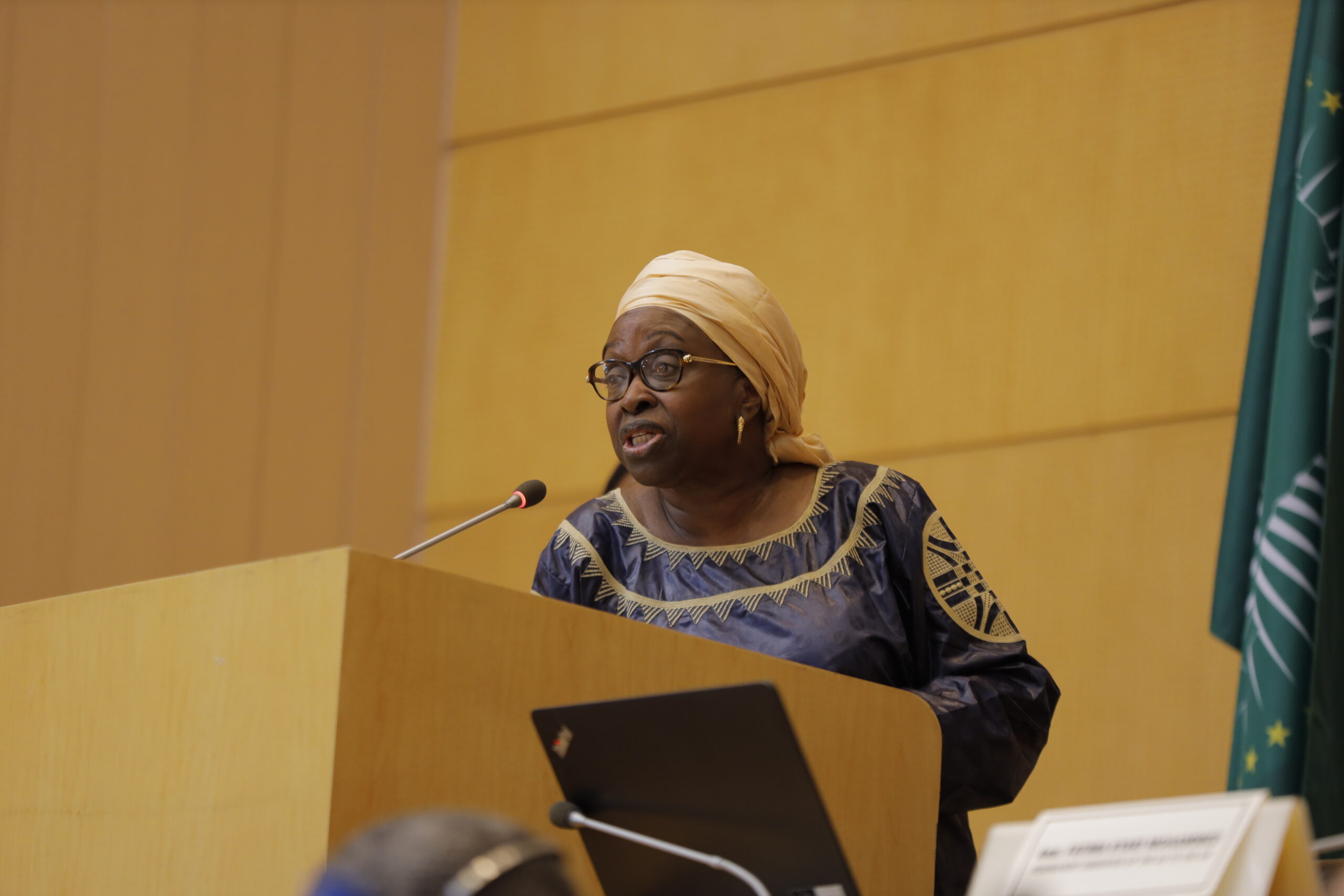
Excellencies; Ladies and Gentlemen; All protocol duly observed. I am honored to be in this panel today; I bring you greetings for the African Union and wish to recognize all the women in this room who are constantly fighting the good bat Since 2014, when the African Union Special Envoy on Women, Peace, and Security (WPS) has been officially established, the AU has been bringing a unique and essential perspective to the WPS agenda; Today’s topic on "WPS Action Across Regions: Leveraging Institutions, Networks, and Mechanisms."
• As the African Union Special Envoy on Women, Peace and Security, I wish to offer some perspective drawn from the African Union's (AU) strategic frameworks, our regional experience, and the lessons learned in advancing the WPS agenda across Africa—a continent where women play key roles in peacebuilding yet often face exclusion from decision-making processes. 1. First, we must make sure we leverage Regional Frameworks for WPS- The AU has embedded the principles of the WPS agenda in its key frameworks, such as the agenda 2063, the African Peace and Security Architecture (APSA), and the Protocol on the Rights of Women in Africa (Maputo Protocol). The AU’s experience demonstrates the importance of aligning global WPS objectives with regional priorities to ensure local relevance and ownership. It is essential that we put emphasis on regional organizations as they serve as catalysts to bridge the gap between policy and practice by fostering coordination among member states and relevant stakeholders. 2. The AU has established institutional mechanisms for WPS implementation, such as national action plans on WPS with monitoring and evaluation mechanism for accountability. We also have gender desks within the Political Affairs, Peace and Security (PAPS) Department, to support the implementation of WPS Agenda. It is therefore important to highlight that building capacity within institutions and fostering accountability through monitoring and reporting mechanisms are key to ensuring progress. Additionally, partnerships with other regional bodies and the UN have helped the AU strengthen its advocacy and support for women peacebuilders. UN Women, for instance has been a strong partner of the AU OSE and we have been able to achieve much, including the recently concluding Regional Peace Forum in Angola. Initiative such as the Positive Masculinity toward an AU Convention to Eliminate on Violence against Women and Girls in Africa (CEVAW) is a case in point. We are working with many partners and thanks to their support we hope to submit for adoption at the next AU summit in Addis Ababa in Feb. 2024. 3. The African Women Leaders Network (AWLN) exemplifies how Networks can amplify women’s voices at national and regional levels. Through initiatives like AWLN, the AU empowers women leaders to engage in conflict prevention and resolution processes. It is important to stress within women’s movement; we must also straighten grassroots and community engagement for enhance participation in order to transform policies into sustainable peace efforts. With 36 National chapters, AWLN is able to bridge the gap and be a platform where women leaders could lead mediation efforts while managing mediation teams as this has been done in many instances by men. We must demand the right to do so! 4. In recent years, persistent challenges such as political instability, resource constraints, and deeply rooted gender norms that limit women’s participation in peace processes have hampered progress in WPS. This is one of the reasons why the AU has been fiercely pursuing it initiative on EVAWG; we have also included the youth in this quest through the African Youth Ambassadors for Peace (AYAP) and leveraging digital platforms to promote dialogue and innovation in peace efforts. 5. Sharing lessons and best practices across regions is vital for advancing the WPS agenda globally. We must therefore promote inter-regional cooperation, enabling Africa to share its experiences in integrating women into peace processes while also learning from other regions' successes and challenges. Forums such as the Focal Points’ Network, with consistent engagements, are essential to ensuring regular interactions and the exchange of experiences on the global stage. Additionally, joint initiatives can enhance the impact of WPS action across regions, ensuring no woman is left behind. I therefore recommend we explore joint ventures that will highlight the synergies between different regions, foster mutual learning, and create platforms for collaborative problem-solving. These initiatives will not only amplify the voices of women in mediation but also ensure that effective practices are adapted and scaled, driving sustainable peace and security worldwide. 6. To conclude my intervention, I wish to emphasize that the WPS agenda is not merely a policy framework but a transformative tool for sustainable peace and inclusive development. Women across the African continent and beyond have been mobilizing to ensure they are not left behind and that peace remains sustainable by leveraging policies, frameworks, lessons learned from best practices, and innovative approaches such as the AWLN Network, while also engaging regional bodies. Furthermore, the African Union remains committed to advocating for the meaningful participation of women in all aspects of peace and security. Collaboration across regions presents a powerful opportunity to accelerate the implementation of the WPS agenda, fostering a safer and more equitable world for all. Let’s then seize this High-level WPS week, to amplify and strengthen the call for institutions like the UN Security Council to prioritize and address women’s issues with the urgency and commitment they deserve. I thank you.